Qiyam
The Qur'an
Hadiths on keeping the Quran you've memorized
What the Prophet ﷺ said about keeping the Quran you memorize: the tied camels, "commit yourself", keep reciting, and the reward of the one who carries it.
By Amine Benlaroui, , 5 min read
The Prophet ﷺ compared the Qur'an held in memory to camels that must be kept tied: "If he keeps them tied, he will control them, but if he releases them, they will run away."1 His advice to those who memorise it was to keep reciting it regularly, and he described a high rank for the one who carries it and still recites it. Together these hadiths make revision part of carrying the Qur'an, not an extra.
This article gathers the sound hadiths most often cited on the subject, with their references and grades, and what each can change in a hafiz's daily revision. It gives no rulings: for questions of fiqh, such as what forgetting means for you personally, ask a scholar you trust.
What did the Prophet ﷺ say about keeping the Quran?
Three narrations in Sahih al-Bukhari speak directly to keeping what has been memorised.
The tied camels
Ibn ʿUmar narrated that Allah's Messenger ﷺ said: "The example of the person who knows the Qur'an by heart is like the owner of tied camels. If he keeps them tied, he will control them, but if he releases them, they will run away."1
The picture is practical. Camels are valuable, and they are kept by a daily habit, not by a single effort. The owner does not tie them once and walk away.
Faster than a camel from its rope
Abu Musa narrated that the Prophet ﷺ said: "Commit yourself to the Qur'an, for by Him in whose Hand is my soul, it is surely more prone to break away than a camel in its bind."2
"Commit yourself" translates taʿāhadū, the instruction at the start of the hadith. The rest explains why it is needed. For someone who memorises, this is the clearest prophetic statement that keeping the Qur'an takes ongoing attention.
Keep reciting it
ʿAbdullah narrated that the Prophet ﷺ said: "It is a bad thing that some of you say, 'I have forgotten such-and-such verse of the Qur'an,' for indeed, he has been caused (by Allah) to forget it. So you must keep on reciting the Qur'an because it escapes from the hearts of men faster than camel do."3
The practical instruction is the same as in the other two: keep on reciting. Scholars have discussed the first part of this hadith at length; this article leaves that discussion to them and stays with the advice every hafiz can act on today.
Is the Quran easy to memorise and keep?
The Qur'an describes itself as made easy for remembrance, in a verse repeated four times in Surah Al-Qamar:
وَلَقَدْ يَسَّرْنَا ٱلْقُرْءَانَ لِلذِّكْرِ فَهَلْ مِن مُّدَّكِرٍۢ
And We have certainly made the Qur'an easy for remembrance, so is there any who will remember?
And it describes itself as kept in people's hearts: "Rather, the Qur'an is distinct verses [preserved] within the breasts of those who have been given knowledge." (Al-'Ankabut 29:49)
The hadiths above do not contradict this. Something can be easy to remember and still need to be returned to. That is the balance a hafiz lives with: the Qur'an comes to you readily, and keeping it is a matter of steady habit.
Is it a sin to forget what you memorised?
This is the question many people search for after reading the hadiths above, and it is a question of fiqh. It depends on details this article cannot weigh: how the forgetting happened, what was forgotten, and what the person is doing about it. Ask a scholar you trust rather than relying on an article or a social media post.
What the hadiths do settle, for anyone who memorises, is the instruction itself: commit yourself to the Qur'an and keep on reciting it. If you have let part of your hifz slip, the way forward is the same as for everyone else: start reciting again today, with the parts you still hold, and rebuild the rest a little at a time.
What reward is there for the one who keeps reciting?
Several sound hadiths describe the honour of the one who carries the Qur'an and keeps reciting it.
- Recite and rise. "It shall be said - meaning to the one who memorized the Qur'an - 'Recite, and rise up, recite (melodiously) as you would recite in the world. For indeed your rank shall be at the last Ayah you recited.'"4 The same narration appears in Sunan Abi Dawud.5 Both are graded hasan or sahih by every scholar sunnah.com lists.
- With the noble scribes. "One who is proficient in the Qur'an is associated with the noble, upright, recording angels; and he who falters in it, and finds it difficult for him, will have two rewards."6
- The one worth envying. "Not to wish to be the like except of two men. A man whom Allah has given the knowledge of the Book and he recites it during the hours of the night, and a man whom Allah has given wealth, and he spends it in charity during the night and the hours of the day."7
The hadith of Aisha is a comfort for anyone who struggles. Stumbling over a page you are trying to keep is not wasted effort: the one who finds it difficult has two rewards.
What do these hadiths mean for your daily revision?
Without adding to what the hadiths say, a few practical habits follow naturally from "commit yourself" and "keep on reciting".
Recite every day, even a little
The camel image is one of daily care. A short portion recited every day keeps more than a long session once a week. Tie it to a fixed moment, such as after Fajr or before sleep, so it does not depend on how the day goes.
Recite from memory, not only from the mushaf
Keeping the Qur'an in the heart means being able to recite it without looking. Read the mushaf for its reward and to correct yourself, but make sure part of each day's revision is recitation from memory, with the mushaf closed until you need to check.
Pray with what you have memorised
The hadith of Ibn ʿUmar on envy mentions reciting the Book during the hours of the night. Praying with the surahs you hold, rather than only the shortest ones, turns each prayer into revision.
Give more time to the places that slip
Not every page needs the same attention. A surah you have recited since childhood usually needs less; a page you added last month needs to come back within days. Notice where you stumble and return to those places more often.
How can you build this into a routine?
The hardest part of "keep on reciting" is consistency: knowing what to revise today, and coming back after a missed day. A written plan, a teacher, a revision partner or an app can each carry that load.
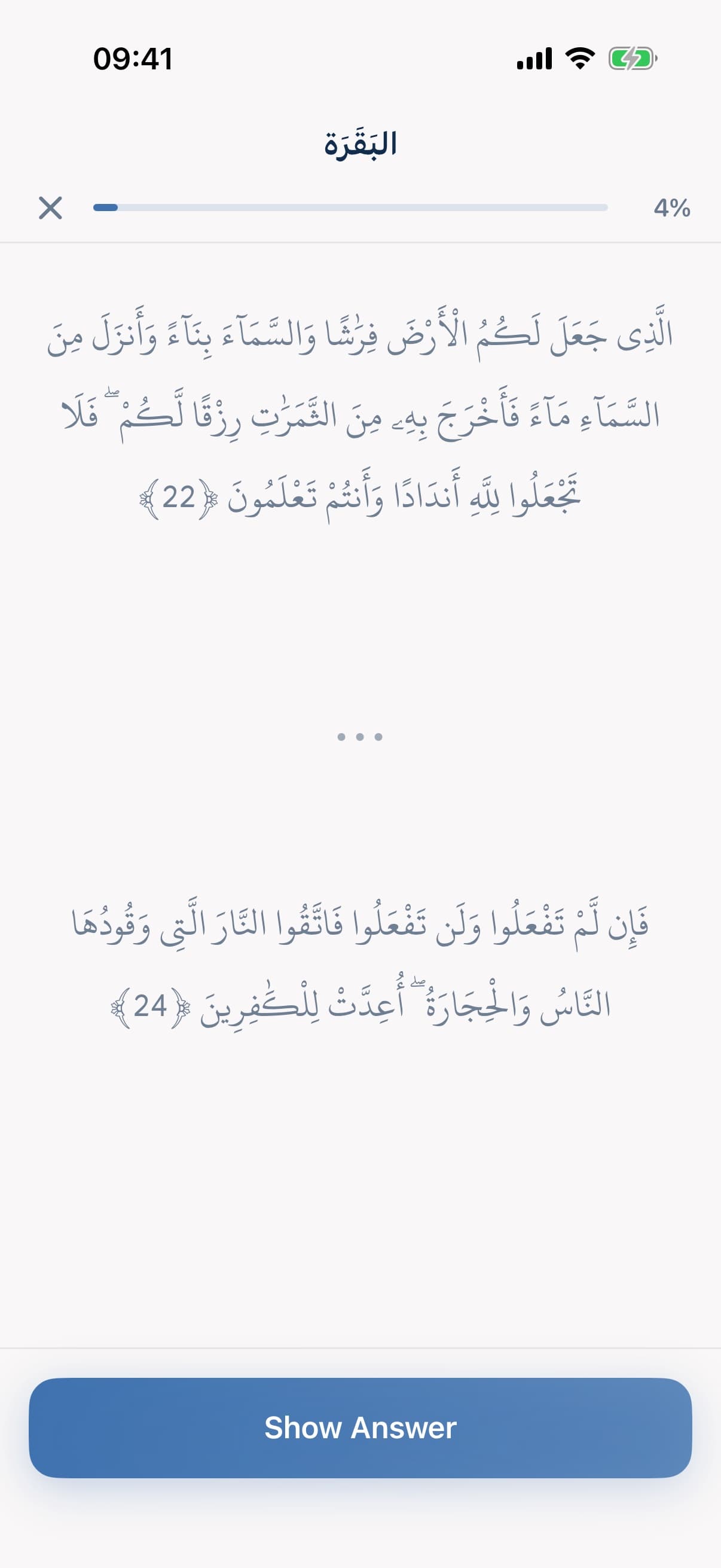
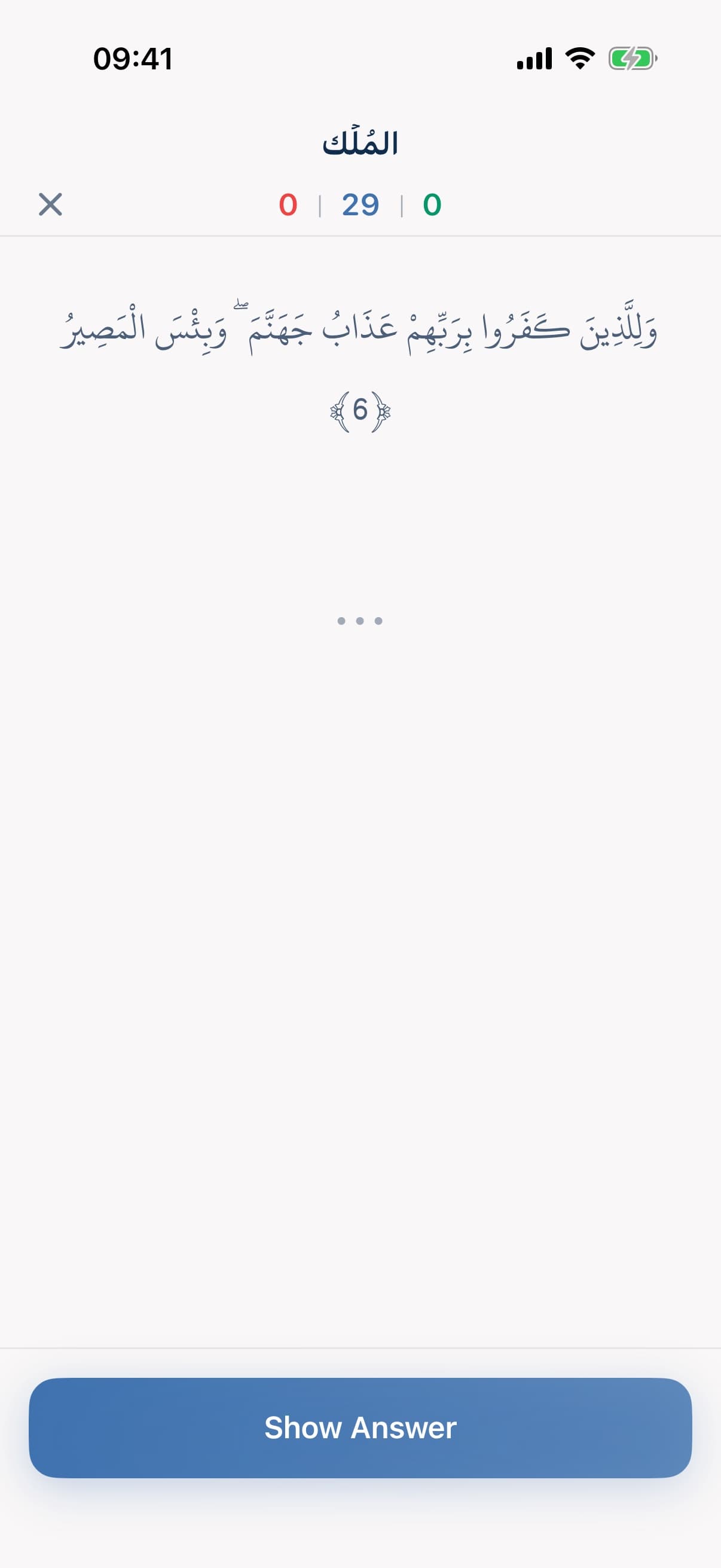
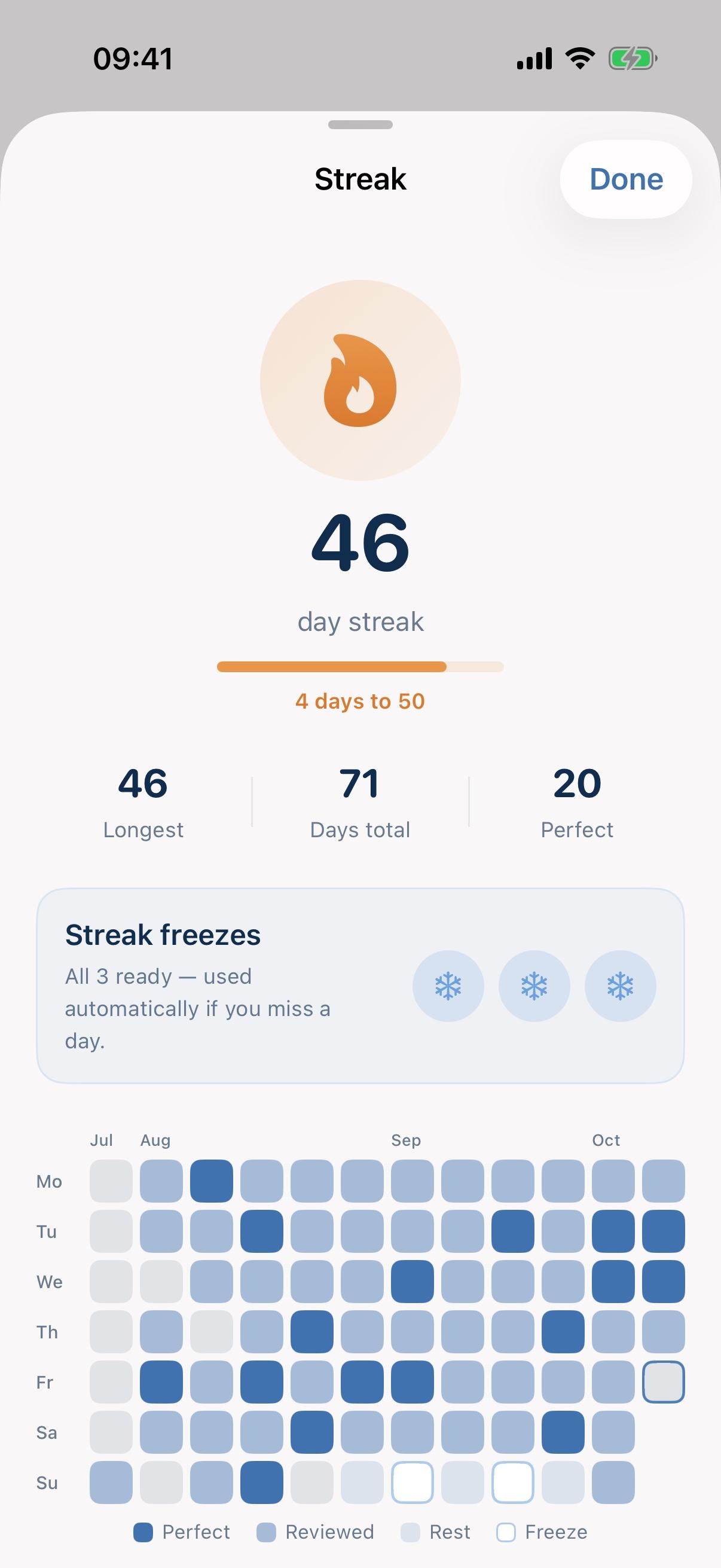
Qiyam is built for this part. Every verse you add has its own review schedule, so the verses you struggle with come back sooner and the solid ones later. A daily streak counts the days you revise, along with the days the schedule legitimately leaves empty, and one daily reminder comes at the hour you usually review.
Whatever you choose, the hadiths point to the same habit: return to the Qur'an every day, and recite it.
A short summary
- The Qur'an held in memory is like tied camels: kept by a daily habit (Sahih al-Bukhari 5031).
- "Commit yourself to the Qur'an": keeping it needs ongoing attention (Sahih al-Bukhari 5033).
- "Keep on reciting the Qur'an" (Sahih al-Bukhari 5032).
- The one who carries it is told to recite and rise, and the one who struggles has two rewards (Jami` at-Tirmidhi 2914, Sahih Muslim 798a).
Sources
- 1al-Bukhari The one who knows the Qur'an by heart is like the owner of tied camels. Sahih al-Bukhari 5031.
- 2al-Bukhari Commit yourself to the Qur'an. Sahih al-Bukhari 5033.
- 3al-Bukhari Keep on reciting the Qur'an. Sahih al-Bukhari 5032.
- 4at-Tirmidhi Recite, and rise up. Jami` at-Tirmidhi 2914 (graded hasan sahih).
- 5Abu Dawud Recite, ascend and recite carefully. Sunan Abi Dawud 1464 (graded hasan sahih).
- 6Muslim The one proficient in the Qur'an is with the noble scribes. Sahih Muslim 798a.
- 7al-Bukhari Envy is only for two. Sahih al-Bukhari 5025.
Frequently asked questions
What is the hadith about the Quran escaping like a camel?
Abu Musa narrated that the Prophet ﷺ said: "Commit yourself to the Qur'an, for by Him in whose Hand is my soul, it is surely more prone to break away than a camel in its bind." It is in Sahih al-Bukhari (5033). A similar narration from Ibn ʿUmar compares the one who knows the Qur'an by heart to the owner of tied camels (Sahih al-Bukhari 5031).
Is it a sin to forget the Quran after memorizing it?
That is a question of fiqh, and this article gives no ruling: ask a scholar you trust. What the hadiths make clear is the instruction to keep reciting the Qur'an, and that is something you can start again today.
What is the reward for memorizing the Quran?
Among the sound hadiths: the one who memorised the Qur'an will be told to recite and rise, and his rank will be at the last verse he recites (Jami` at-Tirmidhi 2914, graded hasan sahih). The one proficient in it is with the noble recording angels, and the one who struggles with it has two rewards (Sahih Muslim 798a).
How often should a hafiz revise?
The hadiths ask for regular recitation without fixing a number. In practice, a short portion recited from memory every day, with weaker pages coming back more often, keeps more than occasional long sessions.